01
Value
Strategic Alignment and Future Readiness over Administrative Compliance
Ensuring both today's execution and tomorrow's positioning over Producing reports and enforcing procedures
A declaration of what Project Management Offices must become — values and principles that define the next generation of PMOs: strategic capability centers that shape organizational success.
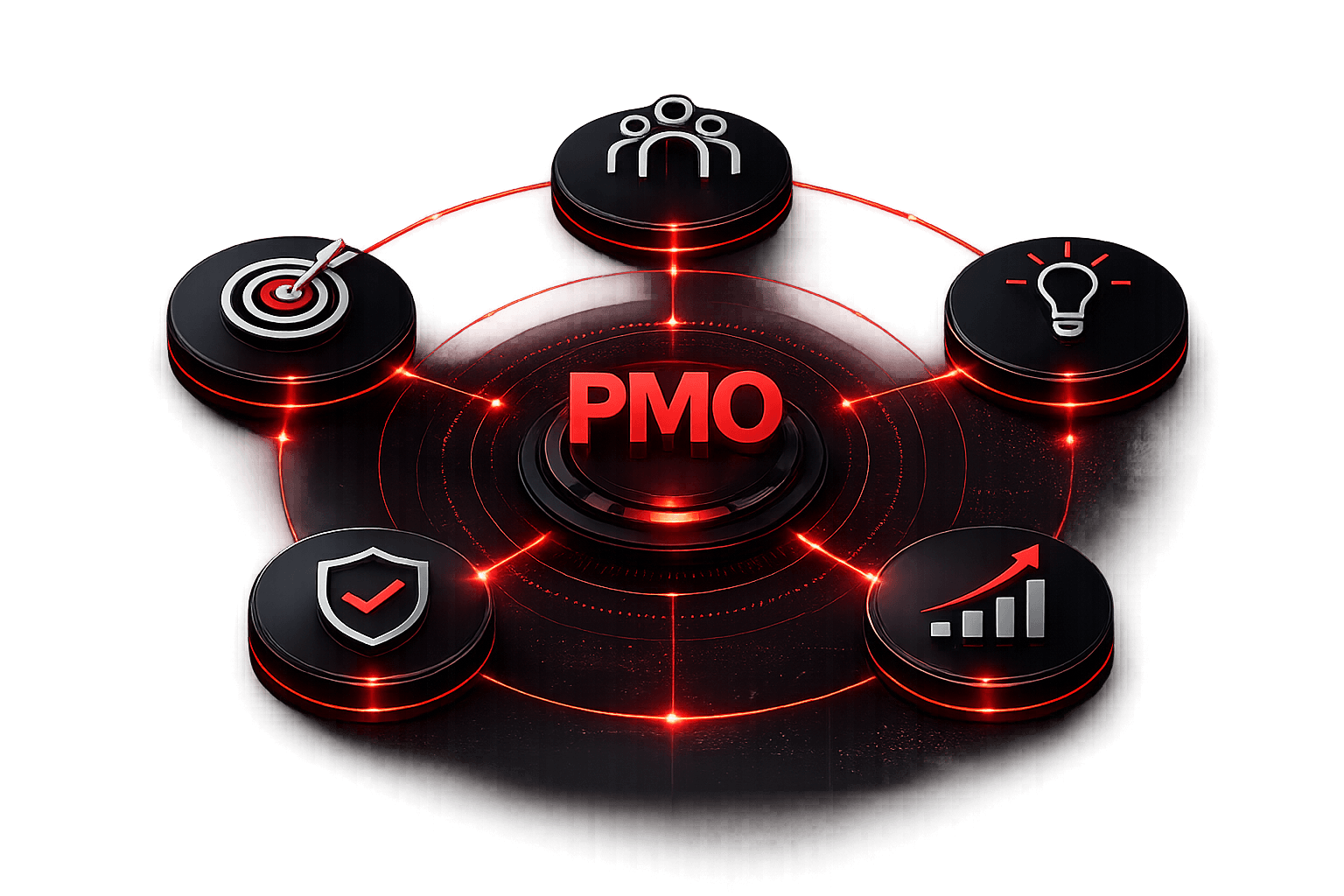
Projects have become the primary mechanism through which organizations create change, deliver results, and realize strategy in an era of rapid and continuous change. Increasingly, they are also the means through which organizations prepare for the future - balancing immediate operational needs with long-term strategic ambitions and future capability development. Yet many Project Management Offices (PMOs) remain trapped between administrative control and operational reporting, focusing more on compliance than on enabling meaningful outcomes.
Across industries - from manufacturing, NGOs, and insurance to defense and public sector organizations - PMOs are evolving. They are no longer merely compliance structures or reporting centers. They are becoming strategic capability hubs that align execution with strategy, optimize portfolios, enable informed decision-making, and maintain a deliberate balance between delivering today's priorities and preparing for tomorrow's opportunities.
Modern PMOs - particularly Strategic and Enterprise PMOs - are expected not only to coordinate projects but to lead portfolio thinking, support leadership decisions, strengthen organizational capability, and provide transparency through reliable data and insight. They empower teams rather than police them, foster collaboration across functions, and continuously adapt to changing organizational and technological environments.
This manifesto reflects insights gathered from experienced PMO leaders and practitioners across sectors. It articulates the values and principles that define the next generation of PMOs - PMOs that do not merely manage projects, but enable organizations to deliver results today while building the capabilities required for the future.
At the heart of every effective PMO lies a set of values that shape how work is prioritized, decisions are made, and people are supported. These values guide PMOs in balancing the demands of today with the responsibilities of preparing for tomorrow, ensuring that projects contribute not only to delivery performance but to lasting organizational impact.
The values that follow represent what modern PMOs choose to emphasize in an increasingly complex environment. While there is value in administrative control, reporting discipline, and procedural compliance, we believe that alignment, portfolio thinking, leadership, evidence-based insight, and adaptability create greater and more sustainable value for organizations.
Ensuring both today's execution and tomorrow's positioning over Producing reports and enforcing procedures
Optimizing organizational outcomes and value realization across the entire portfolio over Managing projects in isolation
Enabling people and teams to succeed over Policing compliance
Using data, insight, and transparency over Relying on fragmented reporting or intuition alone
Evolving practices, structures, and tools as needed over Maintaining static frameworks
Values express what we believe is important; principles define how those beliefs are realized in practice. These 10 principles describe the behaviors and approaches that enable PMOs to transform strategy into execution, balance present demands with future readiness, and create sustained organizational value.
These principles guide PMOs in leading portfolio thinking, supporting informed decision-making, empowering teams, and continuously improving the way work is delivered. They reflect a commitment to disciplined execution, responsible leadership, and the adaptability required to succeed in a changing environment.
PMOs ensure that initiatives are clearly linked to strategic objectives and organizational priorities.
Effective PMOs manage a healthy mix of delivering current commitments, improving existing capabilities, and preparing for future opportunities. They help organizations avoid over-focusing on either short-term delivery or long-term ambition.
PMOs manage interdependencies, priorities, and trade-offs across initiatives to maximize overall organizational value.
Success is measured not only by delivery performance but by the outcomes and benefits created.
Governance structures support clarity, accountability, and timely decisions - not unnecessary bureaucracy.
PMOs strengthen project, program, and portfolio management practices across the organization by promoting a shared way of working and fostering continuous learning.
PMOs foster alignment across stakeholders, functions, and teams to ensure coordinated and synergistic execution.
PMOs leverage trusted data to provide transparency, enable informed decision-making, and generate early insights into risks and opportunities.
The impact of a PMO depends on its ability to influence, guide, and support the organization - enabling effective decisions and coordinated action, not merely enforcing processes.
PMOs evolve with changing business needs, delivery approaches, and technological advancements to remain relevant and effective. By refining practices and adopting enabling technologies - including digital tools, data analytics, and artificial intelligence - PMOs strengthen their resilience and lead organizational change.
Through these values and principles, PMOs evolve from administrative functions into strategic capability centers that shape organizational success.
The Core Committee conducted the interviews, performed the data analysis, and provided leadership, direction, and stewardship in shaping the vision, structure, and content of this manifesto.
This manifesto was enriched by the insights and experiences of the following PMO leaders, who participated in structured interviews and provided valuable feedback during its development.

